Finding signal on Twitter is more difficult than it used to be. We curate the best tweets on topics like AI, startups, and product development every weekday so you can focus on what matters.
Bad font design ruin any brand in 0.3 seconds. Thats what I learned (and 1,000,000s of brand owners, too).
Wrong type selection + default settings = your brand looks like trash
*This article is sponsored by LTX Studio. Thanks to the LTX team for supporting this post and my work for you.
I spent 10+ years crafting design & typography for big & small clients:from mastodons like Warner Music, PepsiCo, Spotify to a local coffeeshops.
Fonts are magical items:
they can elevate a simple brand design to a word-class level and they can ruin even a pro-tier work if they look like sh*t.
Now I’m giving you the exact same premium look the top brands use:
without Figma, Photoshop, or years of practice.
3 TOOLS YOU NEED:
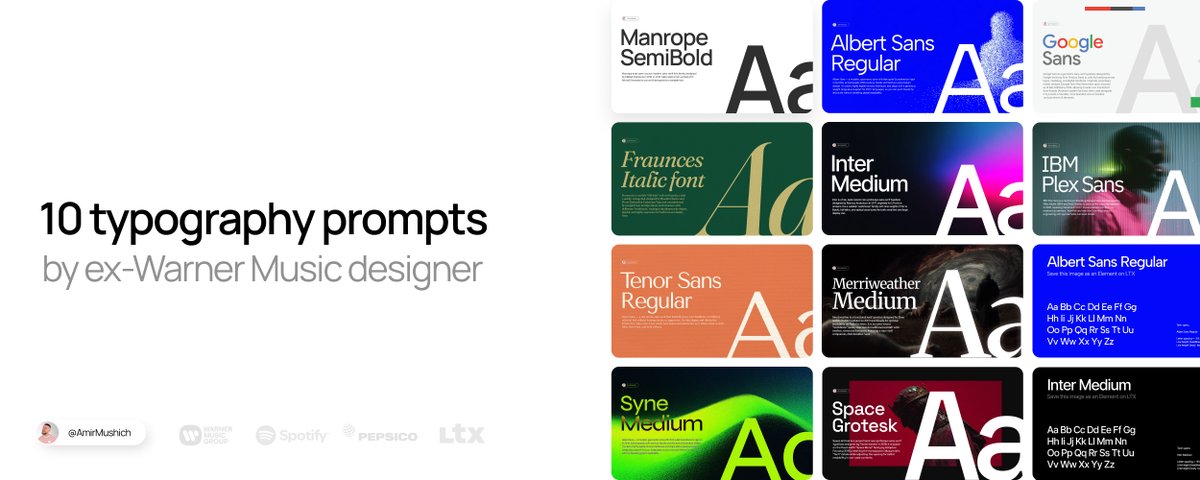
Google Nano Banana - for visual generation, LTX Elements - for font consisttency & workflow organization, 10 prompts below - to make your brand look good.
Change only [YOUR TEXT] → get pro-level type instantly.
Save this article. Use it forever.
WORKFLOW (how it works)
How this works in 4 steps:
Access Google Nano Banana model
(I use LTX -> GenSpace for convenience & organzation)
Select or upload your font as Element for consistency
(Grab my pre-made JPEG files saved in Elements - all the links below)
Copy my preset-prompts → replace only [INSERT YOUR TEXT]
Generate → enjoy your consistent font designs
Why LTX Elements make all the difference
I tested the same prompts on a “clean” Nano Banana model without Elements:
Download my Elements (as images) from this project
Upload them into your LTX Project as Your Elements
Copy my prompts from the LTX Project
Paste the prompt into your project → tag the uploaded Element with @[ELEMENT NAME]
Generate consistent typography → repeat with all the prompts 👇
2. FRAUNCES
Premium, “Old money” style
For: Branding and logos that want a classic serif voice with a warm, offbeat personality (e.g., heritage, food, or friendly fintech/“saucy” business vibes).
Why: Headlines, hero sections, and editorial layouts where expressive typography does the storytelling.