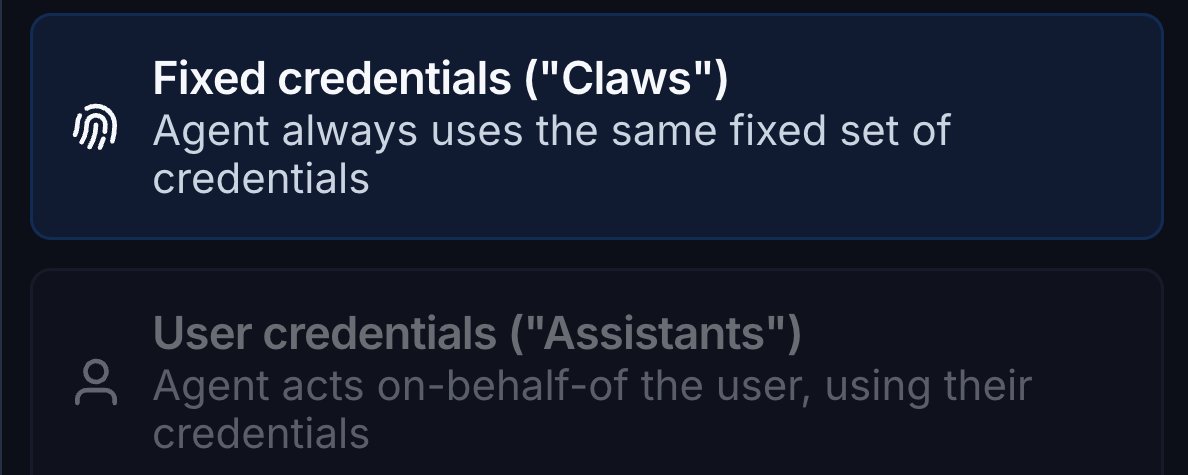

We launched LangSmith Fleet last week as a way to build, use, and manage agents. A key part of this launch was the introduction of two different types of agent authorization.
Agent authorization refers to what the agent is authorized to do. When an agent calls a Slack tool - who does it authenticate as before pulling the data?
On-behalf-of
The standard way that most people thought of agents until recently is that they operate “on-behalf-of” a user.
Let’s imagine an onboarding agent with access to Notion and Rippling. When Alice interacts with it, it should be able to look up information about Alice in Rippling and see all pages in Notion that Alice has access to. Alice should not be able to use this onboarding agent to look up any private information about Bob in Rippling, or see any private Notion pages Bob might have. When Bob uses the onboarding agent, he should be able to access all his information in Rippling and all his private pages in Notion, but not Alice’s.
In order to implement this, you need a few things. You need a way to know who is using the agent - is it Alice or is it Bob? You then need to map those user IDs to some auth credentials that are passed into tools at runtime.
Then came OpenClaw
On-behalf-of was the primary way that people thought of agents until OpenClaw came around. With OpenClaw, Alice would create an agent. Maybe she would be the only one to use that agent (in which case this auth distinction would not matter much). But maybe she would expose to others, through different channels (like text or email or Twitter).
When others interacted with that agent, it didn’t use the credentials of the end user - it used the authorization that Alice had given it.
Sometimes this could be Alice’s own credentials, but that might not be that desirable. If the agent had Alice’s credentials, it could look up anything in Notion that Alice had access to. That might include private documents that he may not want others to be able to ask the agent about.
This lead to people creating dedicated accounts in Notion, Rippling, etc specifically for that agent, so they could control what that agent had access to. Everyone interacting with that agent would then effectively be using the same set of credentials.