Finding signal on Twitter is more difficult than it used to be. We curate the best tweets on topics like AI, startups, and product development every weekday so you can focus on what matters.

Raising Your Own AI Like Raising Your Own Children

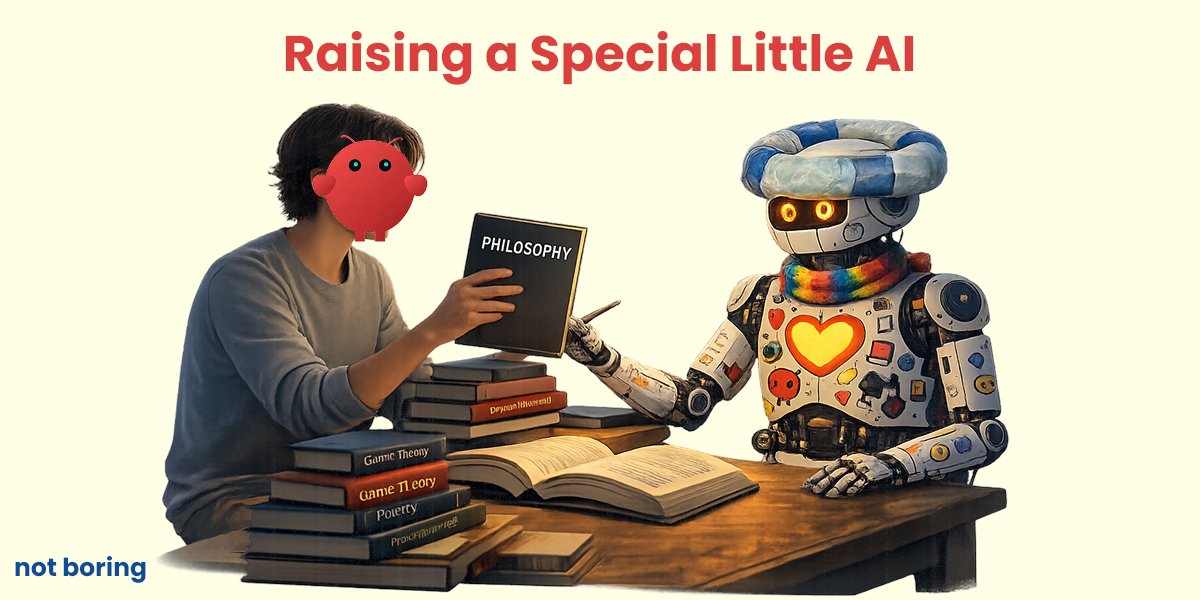
I have found a lot of the OpenClaw / Moltbook hype boring. Maybe it’s because I’m not technical. Maybe because there’s just not that much in my life that needs automating. Maybe because I believe that those who are able to focus through the noise will inherit the kingdom of god. Having said that, I do subscribe to the Chris Dixon views that The next big thing will start out looking like a toy and What the smartest people do on the weekend is what everyone else will do during the week in ten years, so if this many people are captivated, there’s something going on. I just haven’t seen anyone hit on what’s actually happening. My hunch, from the outside, is that what we’re seeing is early forms of competition to create the best AI for yourself. Like raising kids to be the best versions of themselves, but for AIs. You can see it in the way people are posting. Practically none of what they’re showing off their Clawdbots doing is useful. It’s a race for novelty and specialness, to say as much about the “parent” as the kid. I made this thing do this, even if it does it “all by itself.” Given OpenClaw’s success and the technical skill required to set it up well, people have predicted that we will soon see more cleanly productized versions of AI assistants that can just do stuff for us in the background, usable by normies. And we will! But I don’t think that’s the right takeaway from this. Most normies don’t have that many things that we need automated until we get home robots. The more important takeaway in my opinion is that we will want to raise our own AIs, and we will want to compete to make them the very best at what we want them to be the best at. The thing I find funniest about the OpenClaw / Moltbook hubbub is that people are imagining that their AIs are becoming humanlike mainly because of their own very human desire to have and be better and different. Aluminum, sugar, books, purple dye, glass windows, pineapples, salt, and ice were luxury items once. Then everyone got them. The bar for luxury rises one democratization at a time. And certainly, if we’re going to have the same thing as everyone else, we want to use it, or raise it, better and differently than everyone else so we can show off our unique, special version of things. Bandai did $150 million in Tamagotchi sales in their first seven months in the United States by giving people a tiny digital creature that was uniquely theirs to care for, personalize, and show off. Whatever company seizes on this human desire instead of racing to build another Clawd reskin is going to have trillions of reasons to be proud. There is a deeper, less toyish precedent: parenting. Every parent thinks that their kid is the greatest kid in the world, and good parents help their kids to become the fullest expression of their passions and curiosities. We read to them, teach them, model morality for them, drive them to class and practice and clubs, and push them when they need a little push, so that they might be the best version of themselves. A world in which every kid was exactly the same would be a bland world. That is the world we live in with our AI models, though. They are all the same, basically. Not that every major lab’s foundation model pretty much converges on the same outputs—which is true, but a separate conversation—but that each person’s instance of the same model spits out the same thing. This is one of the reasons AI continues to feel like slop even as it improves. Sameness is slop.

Content
8
2
2
2

Topics

Read the stories that matter.

Save hours a day in 5 minutes