Press Space to continue
Press Space to continue
Most absurd corner of the berry market might be Erewhon’s $19 strawberry flown directly from Kyoto. Reason it’s so expensive: in Japan, there’s a farming concept called “hatsumono” (translates to “first of season”). Take any produce (cucumber, tomato) and first farmer to market fetches multiples of the avg. price and gets all media fanfare. Strawberries are an extreme example: the traditional growing season starts in Spring (April-May). But the race to get to market first has made…

Trung Phan@TrungTPhan23h ago
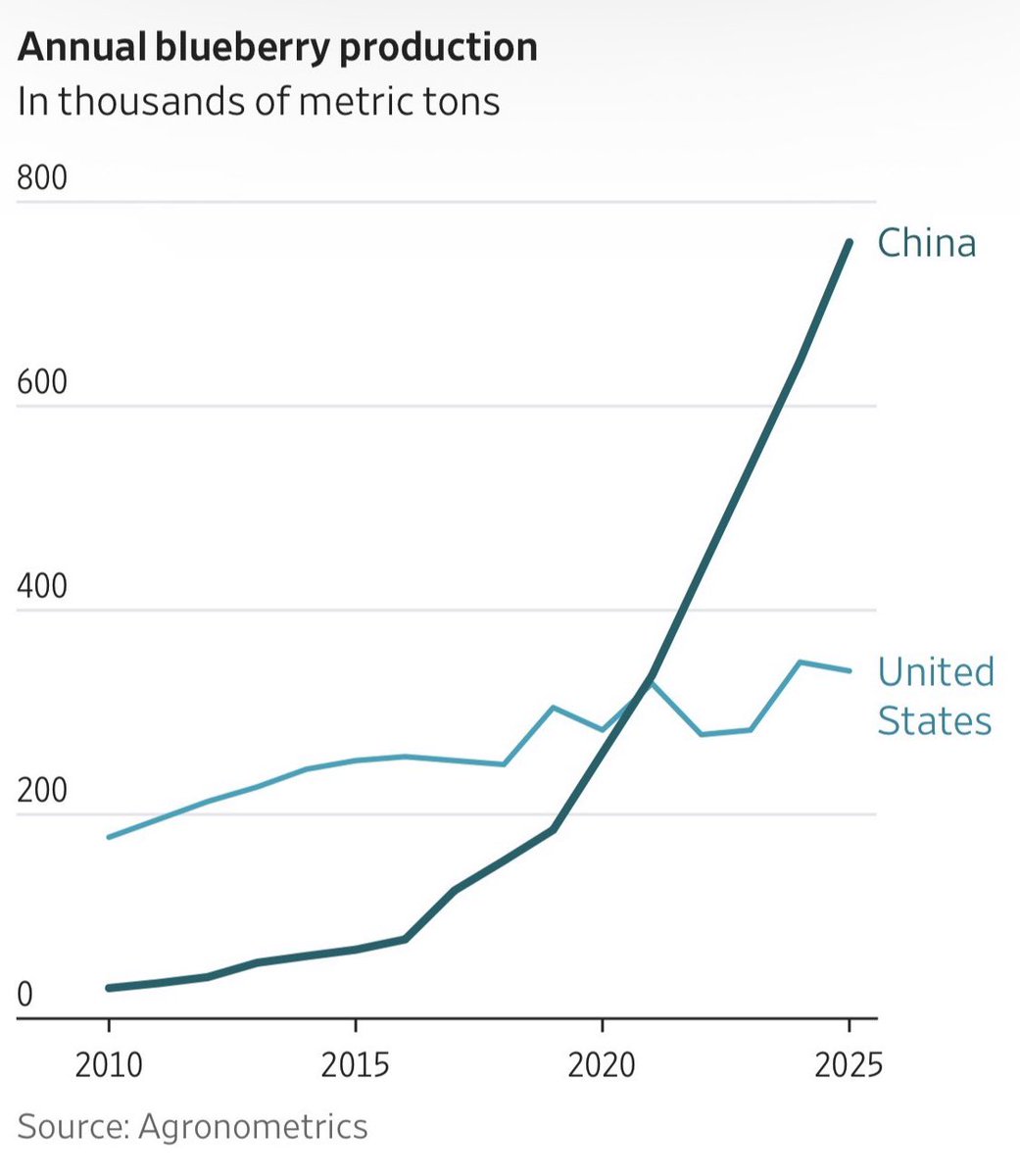
WSJ on how “Driscoll's Gave China Its Blueberries—Then China Swiped the Secret to Growing Them”: ▫️In 2010, Driscoll’s sent its top blueberry expert to China’s Yunnan province. ▫️The fruit growing giant wanted to expand into Chinese market and thought blueberries best option. ▫️Japan was already growing strawberries while raspberries/blackberries were seen as “too foreign for Chinese palates”. ▫️Driscoll’s shared its seed IP and greenhouse designs with select growers. ▫️ “Before long, Driscoll’s was running a small berry empire in China. It worked with more than 150 growers to produce some 30,000 metric tons of fresh blueberries a year in Yunnan—about what California produces annually.” ▫️But the trade secret soon spread across the local farming with dozens of illegal nurseries. ▫️“Production in China has shot up 25-fold since 2010. In 2021, China overtook the U.S. as the world’s top blueberry grower, and by 2025 its annual production was double what it was in the U.S.” at ~800,000 metric tons of blueberries while US is under 400,000. ▫️Blueberry prices in China completely collapsed (down by half over the past decade). ▫️Driscoll’s has filed 20 lawsuits and Chinese courts have ruled against some domestic growers (paid fines and had to burn crops). More broadly, China’s agricultural sector growing rapidly with 60% of world’s greenhouses in the country already by 2019. Other cash crops succeeding in China include avocados, durian and tomatoes. Driscoll's annual revenue across all berries is $7B a year, making it the 2nd largest earning brand in American grocery chains (other than Coca-Cola). China still consumes less blueberries (half per capita to US and Europe) and market opportunity large enough Driscoll's trying to hang around the country. *** Full read here: https://www.wsj.com/business/driscolls-berry-farms-china-competition-b0b49f04

View