Tech Twitter

We doomscroll, you upskill.

Finding signal on X is harder than ever. We curate high-value insights on AI, Startups, and Product so you can focus on what matters.

Simon Sinek's Storytelling Framework for Building Belief

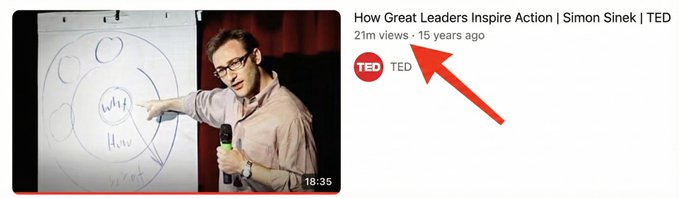
15 years ago, Simon Sinek walked onto a stage with a broken mic and a flipchart. Then he proceeded to give one of the most-watched TED talks in history (21M views). This wasn’t by chance. He engineered success using storytelling hacks we can also learn: 1. Insert a question in people’s minds: “How do you explain when things don't go as we assume?” When a mental "loop" opens up in your brain, you desperately need to close it. He forced the audience to become detectives and crack the case. This is Problem-Agitate-Solution (PAS) at its finest. First, you expose the problem. Then, you agitate the pain of not knowing. Finally, you offer the cure. Sinek sold us the relief of resolving the mystery. 2. Went ‘old school’ with a marker and flipchart. We had good tech back then, but Simon chose a flipchart and a barely functioning marker. The audience saw an idea getting handcrafted in real time. The unpolished and scrappy nature of this was appealing. 3. Created the ‘Hero Vs Villain’ structure. Why are stories like The Lion King and Snow White such huge hits? They use the same framework, and the reader cannot help but be part of the narrative. 4. Repetition is the key to understanding. He kept repeating the line "People don't buy what you do; they buy why you do it,” purposely sounding like a broken record. Repetition is the key to understanding. Repetition builds trust. Your brain starts to take the claim as a fact when it's driven home. It’s the same reason why classic songs still top the charts. Repetition is the key to understanding. 5. He declared: "I believe," not "I think." It’s a powerful distinction. "Thinking" is a process, but "believing" is an identity. Like Martin Luther King Jr., Sinek made believers out of the audience. 6. Added scientific proof to solidify his talk. The way he talks about the Golden Circle and correlated with reason, logic, and data, making his thesis more credible. The emotional connection of the “Why beating the What every single time” is what worked. The lesson in this: If you are a founder broadcasting your thoughts to the audience, this storytelling framework always works.

Content
12
4
2
8

Topics