
As a non-technical AI enthusiast, I did not think OpenAI's Codex was for me (despite its exponential growth among programmers over the past year). I ran most of my agentic workflows through either Claude (with connectors, including Claude in Chrome) or Claude Cowork.
Over the past few weeks, this has shifted. I have migrated over most of my workflows to Codex - and would now recommend the vast majority of non-technical knowledge workers build out their workspace there.
Here's why (and keep reading for how to set it up!):
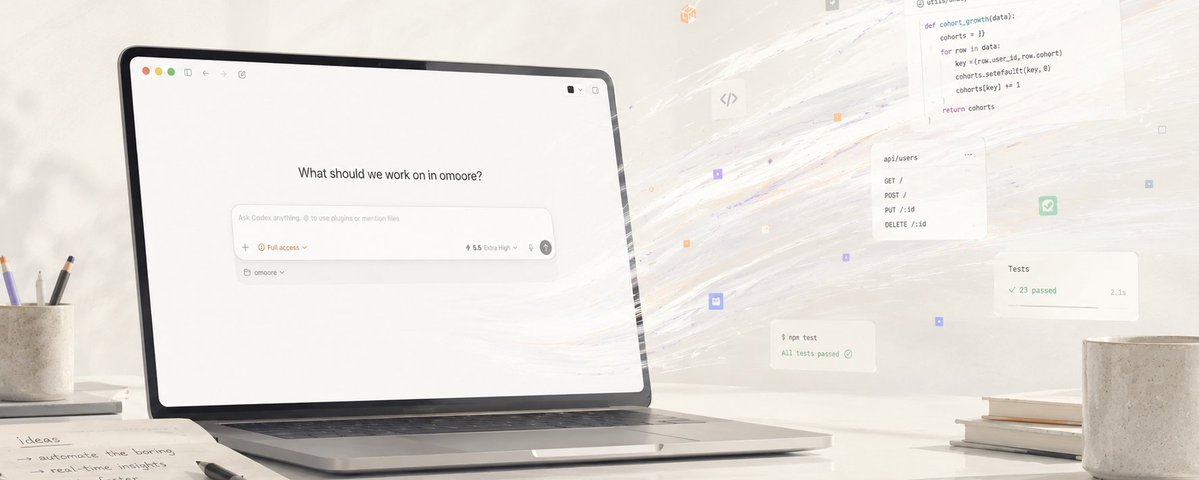
Codex has a very accessible UI. Most people probably think of Codex as something that lives in the Terminal. As of February, you can download the Codex desktop app, and set everything up with no programming knowledge - akin to Claude Cowork. As well as basic chat, Codex has Plugins (analogous to Connectors on Claude) and Automations (analogous to Tasks). I could see myself migrating my entire ChatGPT usage over to Codex, with no more interface-switching required (vs. Codex <-> ChatGPT or Claude <-> Cowork <-> Code).
On Codex, there are also pre-built Skills that you can one-click install. This is a big deal for users in single-player mode, who may not have preset organizational Skills built out. I would guess the Skill setup attempt rate for non-programmers is <10%, and the successful completion rate is even lower! I think there is huge potential for Skills marketplaces both internally within an org, and globally across users, and Codex's UI feels more conducive to this so far.
While this isn't the reason to switch, I'm also partial to Codex Pets. Yes, they're fun - but they're also genuinely useful in providing low friction status updates on tasks, especially for users who aren't living in an IDE all day.
Codex is more powerful - with better consistency + higher limits. This is probably the biggest delta right now over Cowork, and the primary reason to switch. In my testing, the Codex agent is more powerful and more successful in completing tasks.
One of my biggest issues with Cowork (and Claude in general) is how frequently I hit limits or bugs. This is a particularly difficult problem in multi-step tasks that require actions across apps or in the browser. I would rarely be able to actually complete one of these in a single run, without hitting a tool use limit, a conversation limit, a context issue, or some kind of connector failure.