Finding signal on Twitter is more difficult than it used to be. We curate the best tweets on topics like AI, startups, and product development every weekday so you can focus on what matters.

David Ogilvy's Ten Rules for Clear Business Writing

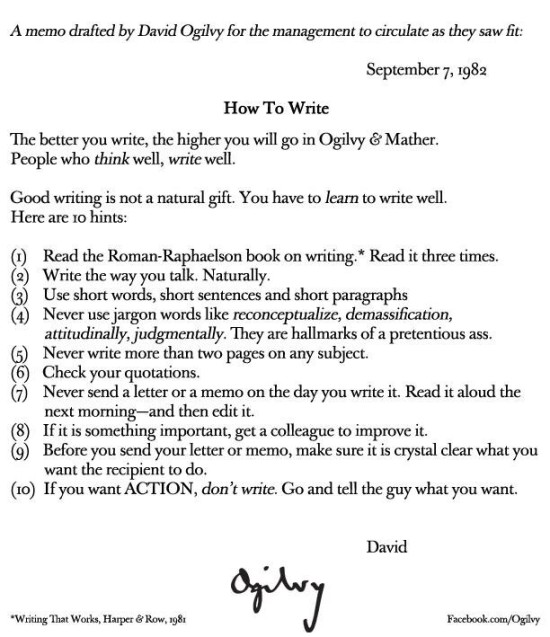
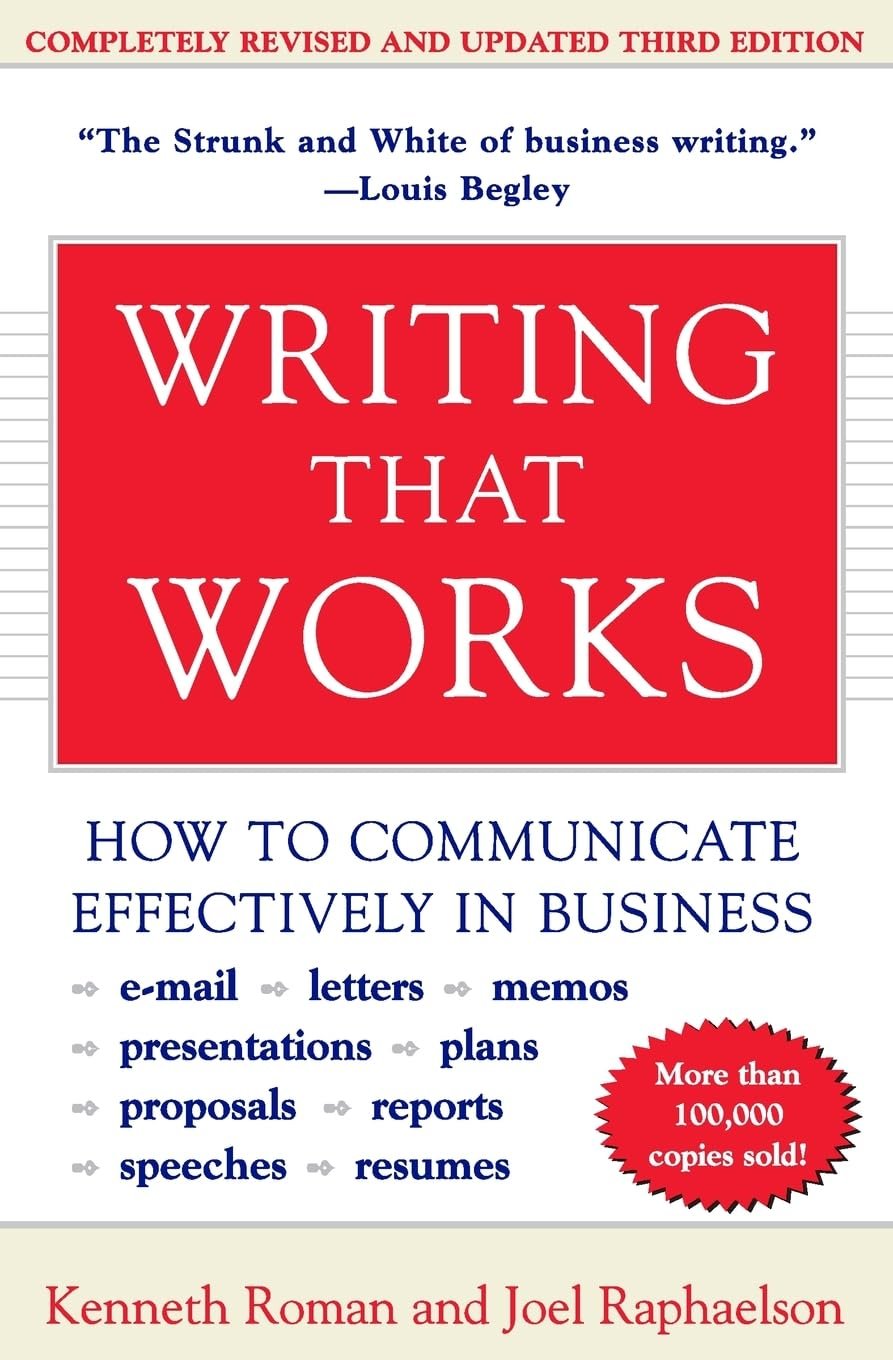
Legendary marketer David Ogilvy generated over $864 million for his clients. He was a British advertiser known as "The Father of Advertising.” Here are 10 writing rules he lived by: In 1982, Ogilvy sent this 1-page memo to his staff: And it starts with a clear promise: > "The better you write, the higher you will go in Ogilvy & Mather. People who think well, write well. Good writing is not a natural gift. You have to learn to write well." Now, replace "Ogilvy & Mather" with any company, and this holds true. Here's a breakdown of the 10 points: # 1. Read the Roman-Raphelson book on writing. Read it 3 times. Every company on Earth would be a better place if this book was required reading. If you are still sending emails with Walls of Text, read this. # 2. Write the way you talk. Naturally. "Finding your writing voice" is a waste of time. You already have your voice—the one you use every day. Here's how to start using it in your writing: • Choose a topic • Record yourself talking about it Then, transcribe it and start there. # 3. Use short words, sentences, and paragraphs. This one takes practice. But the easiest way to find when you're being too wordy? Read everything aloud before you publish it. When you find yourself getting caught up, it's a sign you need to simplify. # 4. Never use jargon. When someone uses jargon, they're hiding their lack of understanding. Instead, pretend you are writing to an 8th grader. # 5. Never write more than 2 pages on any subject. 99% of books should be blog posts. And 99% of blog posts should be LinkedIn posts. I would preface this by saying: Never publish more than two pages on any subject. So, if it can't fit in two pages, it should be simpler. # 6. Check your quotations. This one is simple enough. # 7. Never send a letter or memo on the day you write it. Read it aloud the next morning, then edit it. This is the number one piece of writing advice I give people. If you are publishing something important, always, always, give it room to breathe. And always read it aloud. # 8. If it is something important, get a colleague to improve it. This pairs nicely with point number 7. If it's something really important, write it, give it a day, edit it, then send it to a colleague. # 9. Before you send your letter or memo, make sure it is crystal clear what you want the recipient to do. This is so simple, but easy to forget. Put yourself in the reader's shoes and identify exactly the next step they should take after reading. Then, articulate those steps for them. # 10. If you want ACTION, don't write. Go tell the guy what you want. Last and most importantly, writing is never a replacement for a targeted conversation. Most messages should be conversations, especially ones that require action. That's it! Thanks for reading! If you enjoyed this, then follow me @dickiebush for more posts on digital writing. Then, I'd appreciate it if you jumped back to the top and reposted this article to share it with others.

Tweet image 1
Tweet image 2
Tweet image 3
66
9
10
0

Topics

Read the stories that matter.

Save hours a day in 5 minutes