Tech Twitter

We doomscroll, you upskill.

Finding signal on X is harder than ever. We curate high-value insights on AI, Startups, and Product so you can focus on what matters.

January 2026

Top Voice

@shiri_shh

Most tweets referenced

Trending Topic

Productivity

Most discussed subject

Total Volume

18

Curated tweets

1-18 of 18 tweets

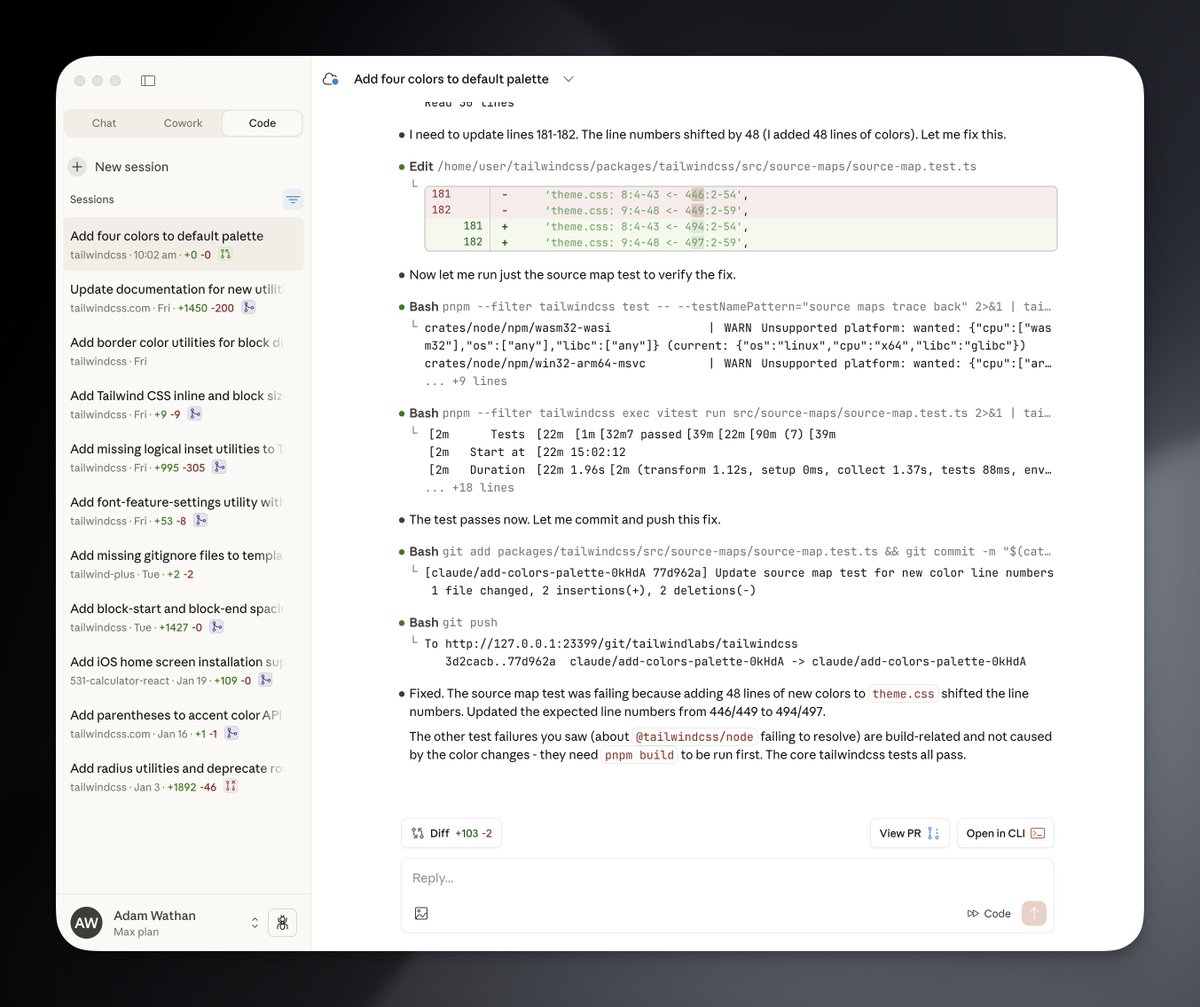
The fundamental coding agent abstraction is the CLI. It’s not a UI or form factor preference, it’s rooted in the fact that agents need access to the OS layer. Coding agents are, at their core, computer-use agents. They run programs, create new ones, install missing ones, scan the filesystem, read logs. More than text editors, they’re *automating your computer* at a low level. It’s more accurate to think of Claude Code as “AI for your operating system” than a continuation of the copilot autocompletion → IDE AI assistance paradigm. Another consequence is that it works for any computer. Your desktop computer, but crucially, also the ones running in the cloud. 𝚗𝚟𝚒𝚖 nerds like yours truly always liked that it’s an editor that runs on your Mac but also any machine you 𝚜𝚜𝚑 into. Imagine if you could launch a million Claude Codes concurrently to tackle a bug, find cybersecurity threats, process your issue backlog, build features based on user feedback, run QA… That’s why we’re building http://vercel.com/sandbox as the infinite compute layer for agents.

Sandbox

Sandbox

78
12
7
37

## the confession I have a confession to make. for the past year I've been quietly working on something that I think will make most of what you do on your phone... unnecessary. not unnecessary like "oh that's a nice optimization." unnecessary like "why would I ever do that myself again." let me explain. ## the app industrial complex here's what happened to software. somewhere along the way we convinced ourselves that the best human-computer interaction was... tapping on little colored squares. downloading a different one every time we wanted to do something new. want to order food? use this app. want to book a flight? download this other app. want to check if your friend is free? another colored square. we have literally trained an entire generation to be professional app navigators. and here's the thing that kills me: every single one of these apps does the same thing at the core. they take your intent and translate it into actions. that's it. that's the whole game. "I want thai food delivered" → tap tap scroll tap confirm tap tap done. "I want to fly to tokyo in march" → tap tap search tap filter tap compare tap tap tap tap book. you're the middleware, man. you're the translation layer between what you want and what happens. you're doing the computer's job. ## the vertical agent trap so then the AI boom happens and everyone says "agents! agents will fix this!" and they're right. kind of. what we got instead was... vertical agents. AI for legal docs, for customer support, for sales emails. but here's my problem. my mom isn't a lawyer. my cousin isn't a developer. my friend who works at the grocery store doesn't need an AI for enterprise sales workflows. what do they need? they need something that can just... use their phone in daily life. like they do. but better. ## the realization I remember the exact moment this clicked for me. I was watching my grandad try to book a doctor's appointment online. he's not tech illiterate (he was an engineer) but he's 67 and the healthcare portal was clearly designed by someone who hates elderly people. click here. scroll there. wait that logged you out. try again. wrong date format. oh now you need to verify your email. where did that email go. spam folder. click the link. link expired. start over. twenty minutes. for a doctor's appointment. and I thought: why is my grandad the one adapting to this interface? why is there an interface at all between what he wants and what he gets? he knows what he wants. "book appointment with dr. chen, next week, morning works better.” ## so we built it so we built an AI that can control any screen. any app. any website. any interface. not through special APIs or integrations. just... looking at pixels and clicking and typing. like you do. but faster. and it doesn't get confused or tired, and it doesn't miss the tiny X button that closes the popup. we call it a universal agent. because it's not an agent for lawyers or an agent for coders or an agent for salespeople. it's just... an agent. for anyone. for anything with a screen. ## what this actually means the phone as “a thing you interact with manually for hours every day” is ending. maybe not tomorrow. but soon. the era where you had to learn how to use technology is ending. my grandad shouldn't have to learn how to navigate a healthcare portal. he should just get his doctor's appointment. your mom shouldn't have to figure out which app to download for which airline. she should just get her flight booked. your coworker shouldn't spend their lunch time navigating a reimbursement form. they should just get paid back. ## why we're doing this look. I could be building another vertical enterprise agent. but I didn't get into this to make software for software people. I got into this because I think there's something deeply broken about how most humans interact with technology, and we finally have the tools to fix it. for literally everyone with a phone. that's 5 billion people who could have their daily friction reduced by 10%, 20%, 50%. that's a lot of hours given back to humanity, a lot of frustration eliminated, and a lot of capability unlocked for people who never had access to it. ## the death of the interface so yeah. we’re killing the interface. or at least, we’re making it optional. you can still tap your little colored squares if you want to. some people like driving manual transmission too. but for everyone else - the people who just want the thing to happen without having to learn the interface for the thing - we're building something different. the universal agent. the thing that makes apps obsolete. the end of humans as middleware. it's here. and it works. agi.app

195
13
11
0

i swear vibe coding is a real addiction now bro i know people who code 12-16 hours a day just building random things. anyone else like this or just few?

Content
253
65
19
35

finally... google lets you change your gmail address without losing emails, drive files, photos, or history new gmail becomes primary old one still works as an alias limit: once per year, max 3 times rolling out slowly

Content
216
41
12
56

Someone just said it

Content
56.8K
318
6.7K
4.5K

Compiled my favorite resources for learning AI into a free website:

Zara's AI learning library | Faces

Zara's AI learning library | Faces

278
21
29
319

REPEAT AFTER ME Facebook Groups are the NEW REDDIT in 2026. Not hypothetically. Not eventually. They are already climbing and by early 2026 this will be one of the easiest SERP exploits left, and guess what? No Neckbeard Reddit mods. What people will still think works in 2026 Writing another Best X blog post Ranking your own site number one Expecting Google or AI to trust self promotion That era is over. What will actually work in 2026 External platforms with built in authority. Facebook Groups check every box Massive domain trust Constant freshness Built in engagement signals No moderation friction Editable content after posting Google will not care that it is a group. It will care that the page is fresh, active, relevant, and trusted. The Facebook Group ranking SOP for 2026 Step 1 Create or use a Facebook Group Public Open posting No heavy moderation Optional but effective Seed members early Redirect aged domains to the group Let it look active before traffic arrives Step 2 Post like this Your first line will function as the meta title. Example Best Local SEO Software 2026 Updated Then choose one Question format What is the best local SEO software right now going into 2026 If comments come in, leave it as a question. If engagement is weak, edit it into a list format. List format Here are the best local SEO tools heading into 2026 based on real use Facebook allows unlimited edits. This flexibility is the advantage. Step 3 Force indexing After posting Click the date or time on the post Copy the URL It must look like facebook .com/groups/groupID/posts/postID That is the URL that gets indexed. Submit it to Indexchex .com immediately (free 150 links). Step 4 Refresh instead of reposting Every few weeks Edit the post Update the year Add or reorder items Change a sentence Freshness will be the ranking lever in 2026. Why this will work Facebook Groups will already be trusted Posts will update constantly Engagement signals are native There are no traditional SEO restrictions Google and AI systems crawl these pages aggressively They will rank for Best X X alternatives Reviews Comparisons Buying intent queries Most people will still not abuse this correctly. What not to do in 2026 Do not rely on your own site Do not wait for perfect content Do not worry about authority metrics Do not assume Facebook is social only This is search arbitrage. TLDR Facebook Groups will be 1. Easy to rank 2. Cheap to scale 3. Difficult to defend against If you are not testing this going into 2026, you're clapped. I am making my group free and open so people can abuse this with me. Comment JIMMY and I will DM you the group URL (must be following).

Content
14
6
0
13

It's a good day to start something new. Happy New Year!

Content
43
6
4
0

The specialist is dying. In 3 years, one creator with a laptop will outcompete a 10-person agency. This isn't a hot take. It's already happening. Welcome to the era of The Everything Creator. The space between what was and what's coming. Some see the fall. Others see the leap. ## The Collapse For decades, we separated skills into boxes. Designer. Developer. Marketer. Content creator. Strategist. You picked one. You went deep. You stayed in your lane. That model is breaking down. AI didn't create this shift. It just accelerated it. The skills that used to take years to learn are now accessible in weeks. Design. Code. Marketing. Content. Distribution. All merging into one person. The walls between disciplines are collapsing. And the creators paying attention are already walking through. The new archetype doesn't follow paths. They create them. ## The New Archetype This isn't about being a jack of all trades, master of none. The Everything Creator is something different. Skillfully versatile. Builds, markets, and ships with taste and intention. • Knows enough about design to create. • Knows enough about code to build. • Knows enough about marketing to distribute. • Knows enough about content to capture attention. And most importantly, knows how to learn fast and adapt faster. This is the new blueprint. My story A few weeks ago, I started building an app called BrandOS. It's an AI-powered OS that helps you build your brand's DNA. No coding background. No technical co-founder. Just me. Ideating. Prompting. Refining. Shipping. In one week, I had the foundation done. That's when it clicked. I just built software that solves real problems. By myself. If I can do it, so can you. ## Multi-Skilled Creators Become the Most Hireable Here's the reality brands and agencies aren't saying out loud yet. Knowing multiple skills is becoming the baseline. The creator who only knows how to post content is getting passed over for the one who also understands analytics, audience psychology, and conversion. But the real edge isn't just stacking skills. It's knowing how to market yourself. Attention is the asset now. The creators who can generate it and convert it into leads, customers, or on-chain users are the ones companies will fight to work with. > "You're not just a creative anymore. You're a one-person growth engine." That's what makes you valuable. Access changed everything. Now even the smallest idea can break through. ## The Solopreneur Surge There's a wave coming. Actually, it's already here. We're about to see more solopreneurs than ever before. Not because people suddenly got smarter or more ambitious. But because the tools finally caught up to the ideas. What used to be gatekept: • Building an app? You needed a developer or funding. • Designing a brand? You needed an expensive agency. • Learning a skill? You needed access or connections. Now? • Open-source libraries. • Free YouTube tutorials. • AI-assisted everything. The ideas that used to stay stuck in creators' heads are now becoming real products. Real businesses. Real revenue. You're seeing solo creators ship software and generate six figures. No team. No investors. No permission. Just leverage. > "The gap between idea and execution has never been smaller." And the creators who understand this are moving fast. Why hire five when one can shine in every direction? ## The Everything Creator as the New North Star Here's where it gets uncomfortable for some people. Specialists who only know how to do one thing are about to get outpaced. Not because specialists aren't valuable. They are. But the market is shifting toward efficiency. Why hire five people when you can hire one creator who understands all five functions? • Less spending on headcount. • More leverage through delegation and automation. • The new top talent isn't the person who goes deepest in one skill. It's the person who can do a lot and ship fast. What I've seen from the inside I've worked with agencies. Seen how they operate. Here's what I noticed. They often pay the creators with the most followers. But those aren't always the ones with the highest conversion. Sometimes they're not even close. It's the creators who are aligned with the brand, who understand marketing, product, and audience, that actually deliver results. The Everything Creator isn't just cheaper to work with. They're more effective. And the market always figures that out eventually. Inside the bubble, you learn what you're made of. ## The Journey I'm not saying this from the outside looking in. I've been building my brand for 3 years now. Started with NFT content when that space was booming. Experimented for a year or two. Then branched into personal branding, content creation, lifestyle. Areas that felt more aligned with who I was becoming. It's been a journey of ups and downs. The ups feel like flow. You're in your zone. Ideas are landing. Engagement is moving. You feel like you're onto something. The downs feel like fog. You're overthinking. Second-guessing approaches. Lost in your own head. Wondering if any of this is working. I've been in both places more times than I can count. What I learned through all of it Consistency beats intensity. Showing up regularly matters more than showing up perfectly. But being adaptive to trends that make sense for you is the growth hack most people miss. You don't chase every wave. You ride the ones that align with where you're already going. And the most powerful connection you make with your audience isn't intellectual. It's emotional. • Share your Ls. • Share your Ws. • Be relatable to their own struggles. • Talk about what you did when you failed. • Talk about what you learned when you won. That's what makes people feel connected to you. A year or two ago, I didn't know how to build a system for my brand. Didn't understand how to create content with intention or scale without burning out. Now I do. Brick by Brick. And that's the point. You don't need to have it all figured out today. You just need to keep building. ## The Takeaway So here's the question I want to leave you with. Where do you see yourself in 3-5 years? • Are you building toward specialist or generalist? • What skills are you stacking right now that will make you indispensable? AI isn't slowing down. The tools are only getting better. The gap between "I have an idea" and "I shipped it" is shrinking every month. The creators who adapt will thrive. The ones who resist will get left behind. > "The Everything Creator isn't a prediction. It's already here." The only question is: are you becoming one? Brick by Brick 🧱

Tweet image 1
Tweet image 2
Tweet image 3
Tweet image 4
Tweet image 5
Tweet image 6
300
55
30
0

Can someone build this app: It scrolls like social media. The users are books you’ve read on kindle. The posts are the parts you’ve highlighted.

840
84
28
394

I used to hate the idea of being a reply guy. It felt forced, noisy, and kind of desperate. So I tried it anyway lmao, a weirdo indeed.. Not to prove it worked. But mostly to prove myself right. And heyyyy guess what?—I wasn't (lol☹) That's how I ended up committing to it for seven days, just to see what would actually happen. w/ raw knowledge ofc. ## ▨ DAY 1 - Preparation of being a RG. I didn't jump into being a reply guy right away. It was actually intentional and kinda planned out. I already knew one thing going in: reply guying is exhausting if you do it blindly. Endless scrolling, forced replies, chasing views. Thats how people burnout in 2 days and quit on the 3rd one. So before posting a single reply, I paused and organized how I was going to play it. Not to optimize things in a fancy way. Just to make sure I could actually survive seven days doing it. AS A QUALITY POSTING GUY, I FREAKING HATE IT... ## My Stupid Setup That Worked. Instead of replying to everything I saw, I spent time building lists. Simple ones bro, you really dont have to overcomplicate it I grouped accounts into three categories: my style of labeling the categories • small (chick) • mid (chicken) • big (eagle) Nothing complicated. Each group had a very specific role. ## ▷ 🐥| SMALL ACCOUNTS: Signal just emoji so i can glide through tabs without swiping long ahh labels Small accounts were mostly early stage crypto and Web3 creators. I replied to them genuinely. No farming. No trying to be clever. Part of it was just being human. Supporting people who are still starting out. The other part was more strategic, at least in theory. My thinking was this: if the algorithm watches behavior, then mixing genuine, low-exposure replies into your activity makes you look less like a machine and more like a real person. i dont know this for a fact. But I treated it like noise in the system. A way to avoid moving in a single, obvious pattern. ## ▷ 🐔| MID ACCOUNTS: Relevance just emoji so i can glide through tabs without swiping long ahh labels Mid-sized accounts were Web3 KOLs and content creators. This was the balance layer. Replying here meant two things: • the topic stayed aligned with my niche • the visibility jumped up a level When a reply gets liked, quoted, or even just read by people already in the space, it doesn’t just boost impressions. It puts your name in front of the right eyes. At this stage, the replies mattered MORE. They had to add something. Not jokes for the sake of jokes. Not forced engagement. Just clear thoughts that fit the actual conversation. This is where I noticed my own posts starting to get more attention too. Again, theory, but the timing lined up. (proof later) ▷ . | BIG ACCS: Momentum just emoji so i can glide through tabs without swiping long ahh labels The last category was big accounts. Not crypto ones, Ok? I focused on fastmoving, high traffic spaces. Sports, especially football, and general meme pages. Accounts where engagement spikes within minutes. Basically this was all about reach or impressions now. If you’re aiming for monetization, impressions matter. And these accounts move numbers fast when you show up early and say something that lands. That's where momentum comes from. ## • Organizing Everything: Once I had those three categories, I needed a way to move between them without endless scrolling. The easiest setup was using lists: or I either pinned them on X: or used X Pro on desktop: where I could put all three lists side by side on one screen. One column for small. One for mid. One for big. No switching tabs. No getting lost in the feed. Just one screen, three lanes, clear intention. That setup alone made the whole thing tolerable. And more importantly, sustainabl.▨ DAY 1 - OF BEING A REPLY GUY. ## ▨ DAY 2 - Live Strategy of RG. By Day 2, I stopped preparing and actually started playing the game. The target was simple: 100 to 300 replies a day. That sounds heavy until you realize two things: • I already optimized the setup • I wasn’t thinking anymore, just executing Once the friction was gone, the volume became tolerable. Almost boring. Which is exactly what you want. ## How I actually replied I didnt bounce around apps or timelines. I left X Pro open on my screen and worked straight from the lists. Small, mid, big. Whatever popped up first. I replied to all three, but I gave more attention to big accounts. Speed and monetization were the goal here, so that’s where time mattered most. ## The ONLY Rule that mattered: E.S.S. This is the part that made the biggest difference. Every reply followed one rule: E.S.S. • Early • Spaced • Substance Early: If you’re late, it doesn’t matter how good the reply is. Speed beats perfection every time. Spaced: Line breaks matter. Walls of text get skipped. White space buys attention. Substance: This didnt mean smart. It meant one of three things: • dumb • funny • slightly controversial ## What I did while waiting/No New Posts When things slowed down, I went straight to the For You page. I scrolled aggressively. The goal wasnt entertainment. It was hunting: • huge accounts that were clearly active • posts gaining traction fast • early viral tweets I could catch before they exploded If I found something worth keeping, I added the account to my list. If not, I replied once using the same E.S.S. rule and moved on. This part was optional, but it sped things up a lot. ## The First Sign it was Working A little into Day 2, something changed. My impressions stopped being random. They stabilized into 4 digits. Consistently. Nothing crazy yet, but enough to know the system was moving. And when you think about it: 4-digit impressions × 200 replies a day adds up fast. Thats when I knew this wasnt just noise anymore. It was the unexpected momentum lol. ## ▨ DAY 3- Became Algorithm's Friend This was the day things felt different. I opened X and realized I wasnt hunting anymore. The algorithm was handing me exactly what I needed. More early viral posts. More of the same categories I’d been replying to. More Web3 content. And most importantly, more huge accounts that were already moving fast. This didnt happen randomly. It happened because on Day 2, I consistently engaged with the same types of posts. Same behavior. Same patterns. Same timing. So the algorithm adjusted. Thats how it works. You show it what you want, it feeds you more of it. At this point, the move wasnt to change strategies. It was to double down. ;) ## Optimizing/Improving E.S.S. By Day 3, the focus wasn’t volume anymore. It was sharpening the replies. I was already comfortable with E.S.S.: • Early • Spaced • Substance Substance, for me, naturally leans toward the third one: • dumb • funny • controversial But let’s be real. Sometimes you get lazy. Or sometimes you're just not in the mood to be clever. That's where @Grok came in. Yes, I said it. ## Leveraging Grok (and why people misunderstand it) People love saying AI replies dont work. Thats only true if you copy paste them raw. Grok actually works if you treat it like a rough draft, not a final answer. And here's what I did. When I spotted a potential early viral post: - I clicked the Grok icon. - Let it analyze the post. - Then I dropped this prompt: > create a SHORT hilarious controversial comment about this situation that can easily start a debate and get attention. > create a SHORT hilarious comparison comment about this situation that can easily start a debate and get attention. That’s it. ## - WEIRDO DISCLAIMER Lower your expectations. Grok rarely spits out something perfect. And thats actually the point. This is where you step in: • tweak the wording • make the grammar slightly wrong • dumb it down • make it sound intentionally unpolished Perfect replies feel fake. Slightly messy ones feel human. And controversial ones? Those travel FAST asf. If you ask me, leaning into mild rage bait at this stage is part of the fun. ## The Surprising Result By the end of Day 3, the jump was obvious. Impressions werent in 4 digits anymore. They crossed into 5 digit mark There's a Compounding Effect too look at this LATE Day 2 Result: diabolical... That was the first real confirmation that the system wasnt just working. It was accelerating and validating what we're doing. And the crazy part? I didnt add more effort. The algorithm did. (work smart hehe) ## ▨ DAY 4- Compound Effect of the Strategy. By Day 4, our made up system was running smoothly. Grok was handling the rough drafts. I was tweaking, humanizing, and sharpening them into ragebait replies that actually felt diabolically real. The results started coming easier. Not because I worked harder, but because the quality of the E.S.S. improved and ofc we're wise.. I stayed around 300 replies a day. Not more. That part matters. Whyyy? Nonstop replying looks impressive, but its also how you get flagged. Algorithms are good at spotting bot like behavior. You still need breaks. You still need pauses. I never got warnings or spam flags, and Im pretty sure thats because I didnt push it to “reply guy on steroids” levels. Rest is part of the strategy Five digit impressions stopped feeling special. They became normal. 6 digit impressions started showing up more often than I expected. Same effort. Same structure. Just better execution. Thats what happens when you repeat something long enough for it to sharpen itself. (E.S.S.) ## Leveraging Seasonal Trends in RG. This is where timing started to matter more. I noticed Stranger Things teasers were ramping up. Huge audience. Massive engagement. Fast traction. So I added those posts into my hunt. The move was simple: • catch teaser posts early • grab funny replies that already worked • reuse the same idea on other teaser posts with traction • tweak captions slightly so they didn’t feel copy pasted I saved the best ones and reused them intentionally. And yeah, it worked lmao. ## ▨ SURPRISING Result The part I didn’t expect I wasnt watching the total too closely. I knew I was somewhere around 3 to 4 million impressions. I stopped checking and just kept going. Then I realized something important. The progress didnt stop there when I stopped pushing. Everything we built earlier? Remember that? it kept stacking. (fully counted on the next days) Replies from past days kept getting resurfaced. Old impressions kept compounding. By the end or late of Day 4, it crossed 5 million. When I looked at everything together, thats when it made sense. Reply guying is like planting. One good reply is a seed. Give it time, and it grows into reach, impressions, and momentum. (THIS IS A LIVE CASE STUDY AND ALREADY PROVEN BTW)

Tweet image 1
Tweet image 2
Tweet image 3
Tweet image 4
Tweet image 5
Tweet image 6
Tweet image 7
Tweet image 8
Tweet image 9
Tweet image 10
Tweet image 11
Tweet image 12
Tweet image 13
Tweet image 14
Tweet image 15
923
141
42
0

Meta paid $2B for Manus. A wrapper on Anthropic and Alibaba models. Rebuildable in weeks. - $20M/head for 100 employees. - 8 months to $100M ARR they didn't have to build. - Millions of users Google won't get. The founders cashed out. The product had no moat.

281
40
16
81

Introducing Pickle 1, the first soul computer. Order batch 1 today at http://pickle.com

Video thumbnail
View
799
104
145
383

one good decision every day

Content
2.8K
44
45
967

2025 as a solopreneur: - $2.834M+ in revenue - Operated at ~91% margins - Sunset my 2 top products - 134K new followers on LinkedIn - 45K new followers on 𝕏 - Traveled domestically 12x - Traveled internationally 8x - Threw 7 small masterminds - Exercised 348 days - Walked 2,460 miles & 6.15M steps - Lost 8 pounds - Took my wife to lunch 60x - Visited 10+ breweries - Lived abroad for 60 days - Flew our parents on vacation first class Life came first, business supported it.

615
116
22
203

A few days ago I shared a life calendar I built: your entire life, shown as weeks on your iPhone lock screen. A lot of people asked for it, so here it is: https://thelifecalendar.com I also added a yearly view to visualize the progress of the current year. Happy New Year

Tweet image 1
Tweet image 2
2.6K
120
202
3.3K

2016: Learn to code 2026: Learn to Claude

1.3K
46
105
93

The #1 way to spot a vibe-coder.

Content
189
80
6
5

1-18 of 18 tweets

Archive - January 2026 | Tech Twitter